The Truth About the S5 Max: Pros, Cons, and Verdict
The landscape of domestic robotics has shifted dramatically over the last decade. What was once a niche novelty for tech enthusiasts has blossomed into an essential category of household appliances designed to reclaim hours of lost time. At the heart of this evolution is the S5 Max, a robotic vacuum and mop hybrid that has maintained a reputation for balancing high-end performance with mid-range accessibility. Unlike early entry-level machines that bumped aimlessly into furniture, the S5 Max represents a sophisticated era of LiDAR-driven navigation and customized software control. This article explores the intricate details of this machine, analyzing its mechanical capabilities, software depth, and overall value proposition for various types of households.
The Evolution of Smart Vacuuming
To understand the S5 Max, one must understand the problem it was designed to solve: the inefficiency of the "hybrid" robot. For years, manufacturers struggled to combine vacuuming and mopping into a single chassis without compromising one or the other. Early hybrids often featured small, gravity-fed water tanks that leaked or failed to provide enough moisture to actually clean a floor. The S5 Max was engineered specifically to address these mechanical shortcomings, introducing an electronically controlled water system that allowed users to dictate exactly how much water was used on a room-by-room basis. This shift from passive to active cleaning management transformed the device from a mere vacuum with a wet cloth into a genuine multi-surface maintenance tool.
Buyers in the electronics space typically prioritize three things: reliability, intelligence, and ease of maintenance. A robot that gets stuck every twenty minutes is not a labor-saving device; it is a liability. The S5 Max utilizes a Laser Distance Sensor (LDS) that spins at 300 RPM, scanning the environment to create a high-precision map. This technical foundation allows the robot to plan its path in real-time, ensuring that it covers every square inch of available floor space while avoiding permanent obstacles like walls, cabinets, and heavy furniture.
Detailed Product Analysis: Mechanical and Software Integration
The S5 Max is powered by a high-torque motor capable of generating 2000Pa of suction. While modern flagship models have reached higher peak suction numbers, the 2000Pa threshold remains the industry standard for effectively lifting debris from carpets and hardwood alike. The vacuuming system utilizes a floating main brush that adjusts its height based on the surface it is currently traversing. This ensures a tight seal against the floor, which is critical for extracting fine dust from tile grout or pet hair from deep carpet fibers.
However, the standout mechanical feature is the 290ml electric water tank. By using a precision peristaltic pump, the robot can shut off water flow entirely when it returns to its dock or when it is traveling through a "carpet zone." This level of control is essential for homes with a mix of flooring types. In the companion application, users can select between low, medium, and high water flow. A kitchen with muddy footprints might require high flow, while a delicate hardwood hallway might only need a faint mist to remove dust. This granularity of control is what separates the S5 Max from its predecessors.
Intelligent Navigation and Mapping
The software experience of the S5 Max is arguably as important as the hardware. Upon its first run, the robot explores the home floor plan, segmenting the space into individual rooms. Once the map is stabilized, users can rename rooms, set specific cleaning schedules, and define "No-Go Zones" or "No-Mop Zones." The "No-Mop Zone" is a critical innovation; it allows the robot to vacuum a carpeted living room while completely avoiding it during a mopping cycle, preventing the dreaded "wet rug" scenario that plagues many cheaper models.
The pathfinding logic uses an adaptive route algorithm. Instead of a simple back-and-forth pattern, the S5 Max calculates the most efficient way to clean a room based on its shape and the obstacles present. If a room is long and narrow, it will clean along the long axis to minimize the number of turns, thereby preserving battery life and reducing cleaning time. The 5200mAh battery provides enough juice for approximately 150 to 180 minutes of runtime, which is generally sufficient for homes up to 2,500 square feet in a single charge.
Shop the latest Electronics picks on Amazon.
Shop Amazon →Pros and Cons: A Balanced Perspective
No consumer electronic device is perfect, and the S5 Max is no exception. While it excels in many areas, there are specific limitations that potential owners should consider before integrating it into their smart home ecosystem.
- Pro: Precision Water Control – The ability to adjust water flow through the app prevents floor damage and improves cleaning efficiency on different surfaces.
- Pro: Exceptional LiDAR Mapping – The navigation is fast, accurate, and works in total darkness, unlike camera-based systems.
- Pro: Custom Cleaning Sequencing – Users can set the robot to clean the bedrooms first and the kitchen last, ensuring the mop cloth is at its cleanest for high-traffic areas.
- Pro: Strong Battery Endurance – With up to three hours of runtime, it can handle large floor plans without needing to "recharge and resume" mid-cycle.
- Pro: Durable Build Quality – The chassis and internal components are designed for long-term use, with modular parts that are easy to replace, such as filters and brushes.
- Con: Lack of AI Obstacle Avoidance – Unlike newer "Ultra" or "V" series models, the S5 Max does not have a front-facing camera to identify small objects like charging cables, socks, or pet waste.
- Con: Manual Mop Maintenance – Since it does not have a self-cleaning dock, the user must manually remove, wash, and dry the mop cloth after every session to prevent odors.
- Con: Average Carpet Performance – While it handles low-pile carpets well, it may struggle with very shaggy or thick rugs where higher suction (3000Pa+) would be more effective.
- Con: Single Side Brush Design – Some users prefer dual side brushes for better corner cleaning, though the S5 Max’s single brush is variable-speed to compensate.
Technical Specifications and Comparison
To better understand where the S5 Max sits in the market, it is helpful to look at the hard data. The following table highlights the core specifications that define its performance profile.
| Feature | Specification Details |
|---|---|
| Suction Power | 2000 Pa |
| Navigation System | LiDAR (Laser Distance Sensor) |
| Battery Capacity | 5200 mAh |
| Dustbin Capacity | 460 ml |
| Water Tank Capacity | 290 ml (Electronic Control) |
| Main Brush Type | V-shaped Floating Bristle Brush |
| Maximum Climbing Height | 2 cm (0.8 inches) |
| Weight | Approximately 3.5 kg |
Buying Guide: Is the S5 Max Right for Your Home?
Choosing a robotic vacuum involves more than just looking at a spec sheet. It requires an honest assessment of your home’s layout, your floor types, and your tolerance for manual maintenance. The S5 Max is a highly versatile machine, but it is better suited for some environments than others.
Best Case Scenarios
If your home features mostly hard floors—such as tile, laminate, luxury vinyl plank, or sealed hardwood—the S5 Max is an elite choice. The electronic water tank is the "killer feature" here. Because you can set different water levels for the tile in the bathroom versus the wood in the entryway, you maintain the longevity of your floors while ensuring a hygienic clean. Furthermore, homes with a predictable layout benefit most from the LiDAR system. If you generally keep your floors clear of small clutter like toys or cables, the S5 Max will navigate flawlessly and rarely require intervention.
It is also a strong choice for pet owners. While the suction isn't the highest on the market, the design of the main brush and the consistency of the cleaning passes make it very effective at picking up daily pet dander and hair before it becomes embedded in the floor. The HEPA-rated filter is also a bonus for allergy sufferers, as it traps fine particles and prevents them from being exhausted back into the air.
Considerations Before Buying
There are two primary reasons why a buyer might look elsewhere. First is the clutter factor. If you have toddlers who leave small toys everywhere or if you have a "cable management" problem behind your TV or desk, the S5 Max will likely get tangled. Because it relies on a laser that sits about three inches off the ground, it can see a wall but it cannot "see" a phone charger cable lying on the floor. In such cases, a model with 3D structured light or RGB cameras for obstacle avoidance might be worth the extra investment.
Second is the hands-off requirement. We are moving into an era of "Auto-Empty Docks" and "Mop Washing Stations." The S5 Max is a traditional robot in the sense that you must empty its dustbin every few days and wash its mop cloth after every mopping run. If you want a device that you can ignore for a month at a time, you will need to look at the more expensive "Ultra" or "Plus" variants of modern robotic vacuum lines. The S5 Max is for the user who wants high-end cleaning performance but doesn't mind spending two minutes after a cleaning cycle to refresh the machine.
Shop the latest Electronics picks on Amazon.
Shop Amazon →Real-World Maintenance Tips
To keep the S5 Max running at peak efficiency, owners should follow a few technical best practices. The sensors—including the cliff sensors on the bottom and the LDS "eye" on top—should be wiped with a dry microfiber cloth once a month. Dust buildup on these sensors can cause the robot to act erratically or "see" obstacles that aren't there. Additionally, the main brush should be checked weekly for hair wrap, particularly around the bearings. The S5 Max features removable brush ends, making it significantly easier to slide off entangled hair compared to older designs.
Regarding the mopping system, it is highly recommended to use only water or a manufacturer-approved cleaning solution. Harsh chemicals or thick floor cleaners can clog the internal pump or degrade the gaskets over time. For the best results, many experienced users suggest pre-wetting the mop cloth before starting a cycle; this ensures the robot begins cleaning effectively from the very first meter rather than waiting for the pump to saturate the dry cloth.
The Verdict: Reliability in a Crowded Market
The "Truth" about the S5 Max is that it occupies the "sweet spot" of the electronics market. It is no longer the flashing new flagship, but that is precisely why it is a compelling purchase. The hardware has been tested over years of consumer use, and the firmware is incredibly stable. It provides a level of navigation and mapping accuracy that many brand-new "budget" robots still cannot match.
While it lacks the modern luxuries of AI-driven object recognition and self-cleaning docks, it excels at the core mission: vacuuming and mopping. It is a workhorse that offers high-precision control through one of the most refined apps in the industry. For the consumer who values software stability and mechanical reliability over the latest "experimental" features, the S5 Max remains a benchmark device.
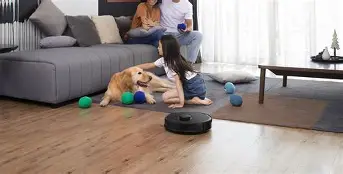
Ultimately, the S5 Max is a tool for the organized home. If you provide it with a clear floor and perform basic maintenance, it will reward you with consistently clean floors and a sophisticated level of automation. It represents a mature technology that focuses on doing the fundamentals exceptionally well, making it a "safe bet" in a market often filled with over-promised and under-delivered features.